Blog
Supreme Court Opens Path to Class Actions for Illinois and New Jersey Final Mile Delivery Drivers
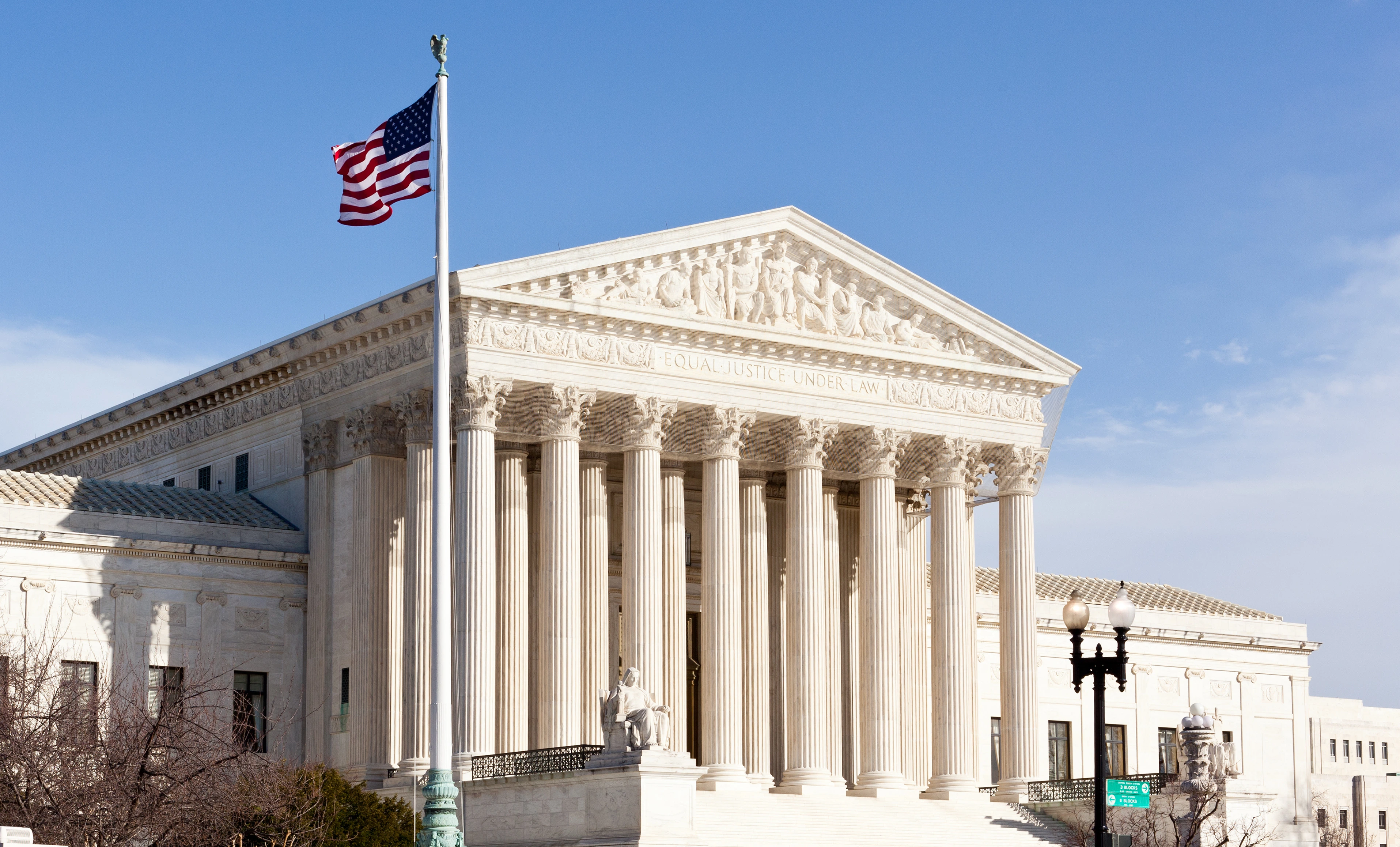
The Supreme Court just handed down a decision that will reshape how thousands of final mile delivery drivers in Illinois and New Jersey approach their legal rights—especially drivers who deliver packages for logistics companies and perform retail deliveries in two states that use one of the strictest worker classification tests in the country.
The Flowers Foods case centered on a simple question with massive implications: Can companies force delivery drivers classified as independent contractors into individual arbitration, blocking them from banding together in court?
For drivers in Illinois and New Jersey who deliver packages for logistics companies or perform retail deliveries, this answer is particularly critical because both states apply the ABC test a stringent standard that presumes you are an employee unless your company can prove otherwise.
Important: This decision primarily applies to drivers who operate smaller delivery vehicles under 10,000 pounds GVWR and do not require commercial driver's licenses. If you drive a commercial motor vehicle or require a CDL, federal motor carrier exemptions likely prevent you from benefiting from this ruling.
Flowers Foods operates a distribution network for baked goods. The company classified its delivery drivers as independent contractors and required them to sign arbitration agreements.
These agreements contained a critical clause: drivers had to resolve disputes individually through arbitration rather than joining together in class action lawsuits.
When drivers challenged their classification and sought to bring collective claims, Flowers Foods pointed to the Federal Arbitration Act. The company argued the FAA required courts to enforce arbitration agreements as written, including the ban on class actions.
The drivers countered with Section 1 of the FAA, which exempts "contracts of employment of seamen, railroad employees, or any other class of workers engaged in foreign or interstate commerce."
The Supreme Court sided with the drivers.
The Court held that delivery drivers who transport goods across state lines qualify as "workers engaged in interstate commerce" under Section 1. This means the FAA does not compel enforcement of their arbitration agreements.
Before we dive into the practical implications of the Flowers Foods decision, you need to understand the ABC test —the legal standard both Illinois and New Jersey use to determine whether you are an employee or an independent contractor.
This test is critical because it creates a presumption that you are an employee. The burden falls entirely on the company to prove you are not.
Under the ABC test, you are legally presumed to be an employee unless your company can prove all three of the following conditions:
Prong A: Freedom from Control
The worker must be free from the control and direction of the hiring entity in connection with the performance of the work, both under the contract and in fact.
This does not just mean what your contract says. Illinois and New Jersey regulators look at the actual working relationship. Courts examine factors like:
Prong B: Work Outside Usual Business
The work must be performed either outside the usual course of the business of the hiring entity, or outside all the places of business of the hiring entity.
This is the prong that sinks most delivery companies.
If you deliver packages for a delivery company, you perform the core function of that business. Delivery is not incidental to the company's operations—it is the operation.
New Jersey courts have been particularly strict on this prong. In Hargrove v. Sleepy's, delivery drivers failed Prong B because delivering furniture was central to the furniture retailer's business model.
For final mile logistics companies and retail delivery operations, drivers perform the exact service the company provides to its clients. Whether you deliver packages from a distribution center, transport goods for retail stores, or perform last-mile delivery for e-commerce fulfillment, that work falls squarely within the usual course of business.
Even if you work from your own vehicle and use your own gas, that does not matter for Prong B. The question is whether the work you do is what the company does. If the answer is yes, the company fails this prong.
Prong C: Independently Established Business
The worker must be customarily engaged in an independently established trade, occupation, profession, or business of the same nature as the work performed.
This means you must operate a genuine independent business that exists separately from your relationship with the hiring company.
Evidence that supports independent business status includes:
Simply forming an LLC, getting a 1099 form, or signing a contract that calls you an "independent contractor" does not satisfy this prong. New Jersey and Illinois regulators explicitly reject these formalities as proof of independent status.
If you would "join the ranks of the unemployed" if the company terminated your access to the platform, you likely fail Prong C. Your business is not truly independent —you depend on the company for work.
Here is what makes the ABC test so difficult for companies: they must satisfy all three prongs. Failing even one means you are an employee.
A delivery driver might have some freedom to choose their schedule (potentially satisfying Prong A) and might have formed an LLC (weak evidence for Prong C), but if they deliver packages for a delivery company, they automatically fail Prong B.
That single failure makes them an employee under Illinois and New Jersey law.
Both states have aggressively enforced the ABC test against delivery and logistics companies.
New Jersey adopted final regulations codifying the ABC test in May 2026, with the rules taking effect October 1, 2026. These regulations make clear that delivery drivers who receive route assignments and follow company protocols will be scrutinized for proper classification.
Illinois applies the ABC test under its Unemployment Insurance Act and Wage Payment and Collection Act. The Illinois Department of Employment Security routinely audits companies and disregards independent contractor agreements that do not reflect the actual working relationship.
Both states have made worker misclassification a priority enforcement area, particularly in the logistics and retail delivery sectors.
If you drive final mile delivery routes, this ruling opens a door that many companies tried to nail shut.
The ruling creates opportunities but does not guarantee outcomes.
The Supreme Court decided that the FAA does not apply to transportation workers. The Court did not rule on whether Flowers Foods drivers were actually employees or properly classified independent contractors.
In Illinois and New Jersey, that test is the ABC test—and it is one of the strictest standards in the country.
The Flowers Foods decision simply ensures you can make that argument in court rather than arbitration, where you can join with other drivers and build a stronger case.
This is a critical limitation. If you drive a commercial motor vehicle as defined by federal or state motor carrier regulations, the Flowers Foods decision likely does not help you.
The Federal Aviation Administration Authorization Act (FAAAA) preempts state laws that affect the "price, route, or service" of motor carriers. Courts have held that this includes state employment classification laws like the ABC test when applied to drivers of commercial motor vehicles.
In practical terms:
You likely fall under the motor carrier exemption.
The decision primarily benefits drivers who operate smaller delivery vehicles those under 10,000 pounds GVWR that do not require CDLs. This includes drivers who deliver packages in cargo vans, box trucks under the commercial threshold, and personal vehicles used for final mile delivery.
The Section 1 exemption covers workers "engaged in foreign or interstate commerce." Many final mile delivery operations involve goods that traveled in interstate commerce, even if your route stays within state lines. Courts often find that drivers handling packages from national distribution networks qualify, regardless of whether you personally cross state lines.
The legal landscape just shifted for drivers in Illinois and New Jersey. Here's what you should consider.
Document your working relationship: route assignments, schedule requirements, pay structure, performance monitoring, and work restrictions. These details prove whether you're misclassified.
Misclassification claims can include unpaid overtime, unreimbursed expenses (fuel, maintenance, insurance), minimum wage violations, and missed meal breaks. Small weekly violations compound over time.
The power of Flowers Foods lies in collective action. Talk to other drivers about pay and working conditions. When patterns emerge, class actions become viable.
Consult an employment attorney familiar with Illinois or New Jersey law, like Bodzy Law. We work on contingency, taking a percentage of recovery rather than charging upfront fees.
For Illinois and New Jersey final mile delivery drivers, the combination of the Flowers Foods decision and the ABC test creates a real opportunity to challenge misclassification.
The decision opened the courthouse door. The ABC test provides the legal framework. Together, they give you leverage to assert your rights but only if you act.

You're facing a workplace issue. Maybe you've been wrongfully terminated, or you're dealing with discrimination, or your employer violated your rights in some way that feels deeply wrong.

You signed a noncompete agreement. Maybe it was on your first day, buried in a stack of paperwork. Maybe you didn't negotiate it. Maybe you didn't even see it until after you accepted the job offer. Now you're thinking about leaving, or you already left, and you're wondering: Does this thing actually hold up?

At Bodzy Law, we meet all of the criteria discussed above. We are specialized and experienced in employment law